

I know “number one” is subjective. There are anime with tighter pacing, stranger ideas, more complex politics, and more consistent animation. But when I call Dragon Ball Z number one, I am talking about something larger than a technical score. I mean the series that became a shared language: the show that taught generations how training, rivalry, sacrifice, transformation, and impossible comebacks could feel.
Toei Animation records 291 episodes of Dragon Ball Z, broadcast in Japan from April 26, 1989 through January 31, 1996. That run transformed Akira Toriyama’s adventure-comedy world into a cosmic martial-arts epic without completely losing the humor and warmth that made the original Dragon Ball lovable.
It made effort visible
Plenty of heroes work hard. Dragon Ball Z made hard work part of the visual grammar of the show. Gravity rooms, weighted clothing, the Hyperbolic Time Chamber, endless sparring, and King Kai’s tiny planet all turned improvement into something the audience could see and measure. The next level was not granted because the plot needed it. Characters trained, failed, recovered, and returned changed.
That structure gave kids and adults the same simple idea: where you begin does not have to be where you end. The numbers could become absurd, but the emotional logic stayed clear. You understand why the hero is stronger because you watched the cost.
Its transformations meant something
The first Super Saiyan transformation is remembered because it is not only a new hairstyle and power boost. It arrives after grief, helplessness, and rage. Goku does not calmly unlock a skill; a line inside him breaks. The image works because the emotion arrives before the spectacle.
The same principle drives Gohan’s defining moment against Cell. His strength has been present for years, but his reluctance is equally important. When he changes, the transformation resolves a character conflict: a gentle child accepts that refusing to act can also have consequences. That is why the scene lasts in memory long after debates about power levels end.
Goku and Vegeta created the rivalry template
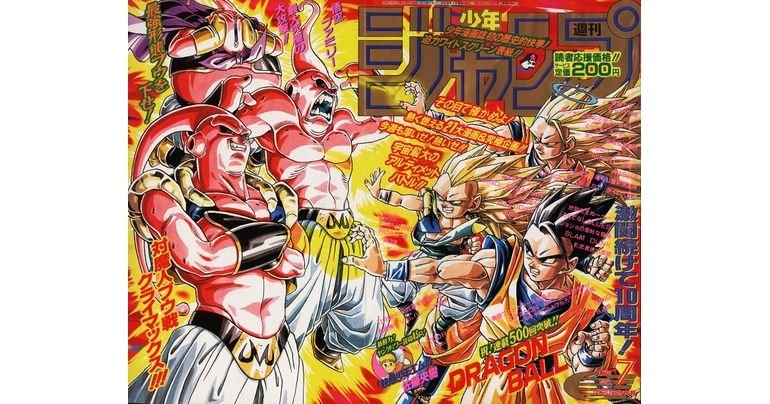
Goku and Vegeta are opposites in the most productive way. Goku’s joy comes from discovering a stronger opponent. Vegeta’s pride makes every stronger opponent feel like a judgment. One runs toward the limit because the chase is fun; the other attacks it because being second feels unbearable.
Yet Vegeta’s evolution is one of the show’s best long stories. He enters as a conqueror, becomes an uneasy ally, builds a family he pretends not to need, relapses when his pride is exploited, and finally makes choices that place other people above himself. His greatness is not that he becomes nicer. It is that his old instincts remain visible even when he chooses differently.
Their rivalry also avoids an easy ending. Vegeta can respect Goku without becoming Goku. Goku can trust Vegeta without requiring him to lose his edge. Modern shonen pairings still live in that shadow.
The supporting cast made the world feel inherited
Dragon Ball Z allows time to pass. Children are born and grow. Enemies become family friends. The planet is saved by people who once tried to destroy it. Piccolo’s relationship with Gohan may be the clearest example: what begins as harsh survival training becomes one of the franchise’s most believable parental bonds.
The series also lets consequences echo across arcs. Gohan’s hidden power is not introduced during the Cell Games; it is visible when Raditz arrives. Vegeta’s capacity for sacrifice is not invented during the Buu saga; it develops through years of humiliation, attachment, and denial. Even when the storytelling is broad, it remembers who these people used to be.
It understood anticipation
Yes, Dragon Ball Z could stretch time. A planet might take a very long time to explode. But its best suspense came from delay used as pressure: the heroes waiting for Goku, a healing chamber that will not open fast enough, an opponent completing a transformation everyone knows should be stopped, or a character charging an attack while allies buy seconds.
That anticipation turned episodes into social events. You did not simply watch a fight; you carried the unresolved moment into school, work, or the next conversation. The wait became part of the memory.
The numbers prove longevity, not the feeling
Dragon Ball began manga serialization on November 20, 1984 and passed its 40th anniversary in 2024. Toei’s international franchise page lists more than 250 million manga sold worldwide, decades of continuous European broadcasting, and a licensing ecosystem that stretches across television, games, apparel, collectibles, and live events.
Those figures matter because they show endurance across formats and generations. But they do not fully explain why someone who has seen a scene ten times still leans forward when the music changes. Longevity comes from the feeling: hope under pressure, the terror of an enemy who seems untouchable, and the belief that one more push might reveal a self you have not met yet.
It is still moving forward
The franchise is not surviving only through reruns. The official Dragon Ball site announced Dragon Ball Super: The Galactic Patrol, with an original story and character designs by Akira Toriyama, as the continuation after the Universe Survival arc. It has also scheduled the enhanced Dragon Ball Super: Beerus for October 2026.
That future exists because Dragon Ball Z built a foundation strong enough to support reinvention. New productions can change the animation, scale, and continuity, but they keep returning to the central engine: Goku, Vegeta, family, rivalry, and the next impossible wall.
My final answer
Dragon Ball Z will always be number one to me because it did not merely show powerful characters. It made growth feel dramatic, friendship feel earned, and courage feel like a decision made while fear was still present. It gave us poses, sounds, rivalries, and transformations that became cultural shorthand.
Other anime may surpass it in individual categories. That is healthy. But the crown I am talking about belongs to the work that changed what millions of viewers imagined anime could be. Dragon Ball Z did that, and every new generation that discovers it renews the argument.
Sources
- Toei Animation: Dragon Ball Z series information
- Toei Animation: Dragon Ball Z international franchise facts
- Dragon Ball Official: 40th anniversary retrospective
- Dragon Ball Official: The Galactic Patrol production announcement


Responses